Manufacturing
How Hongsheng makes pipe systems
A look at the winding line and the points that define a pipe order, from wall structure to joining.
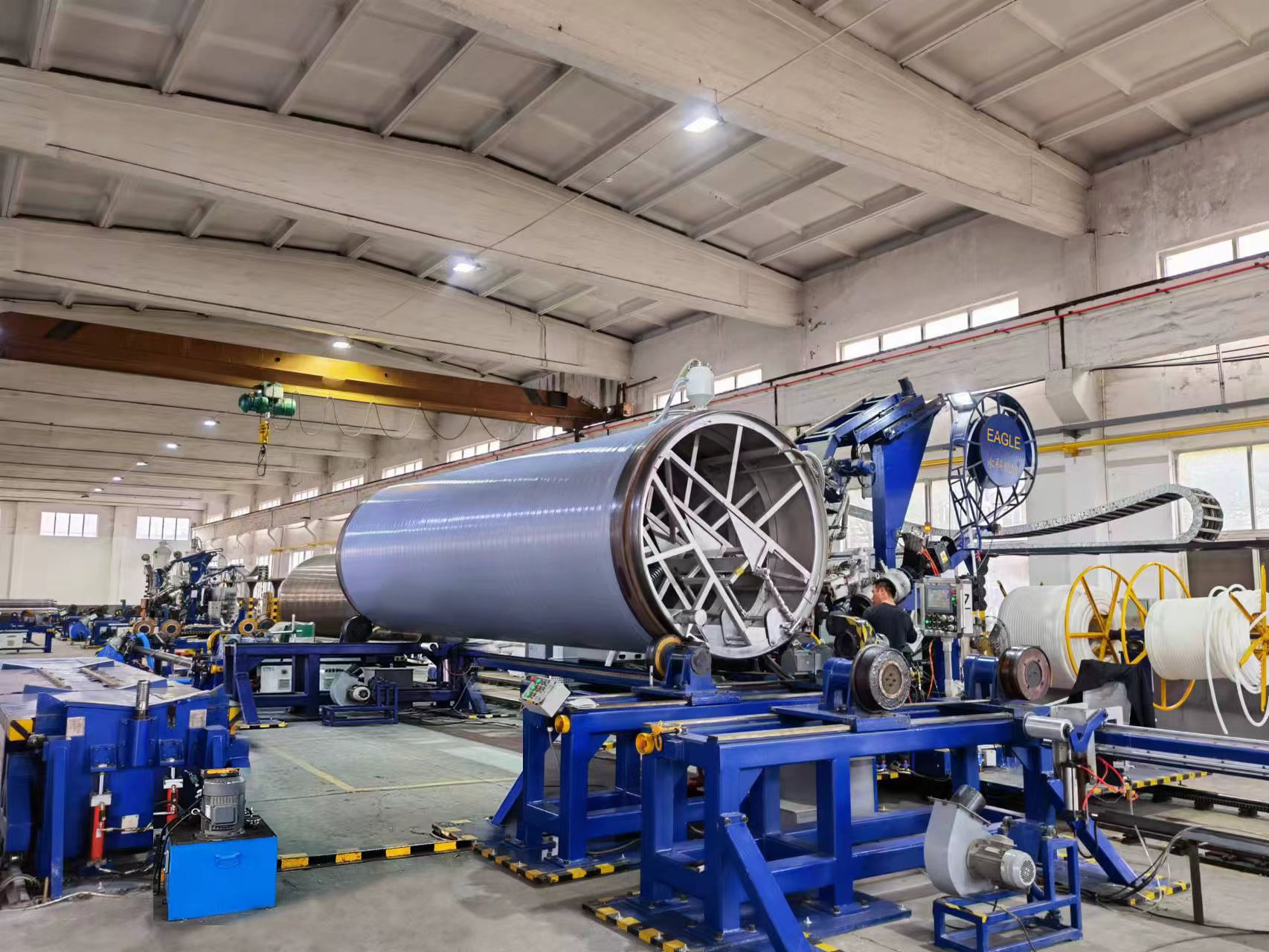
Inside the pipe production process
On the winding line the profile is laid spiral by spiral onto a rotating mandrel and formed into pipe. The wall structure, diameter and stiffness grade are set before production starts.
Spiral-wound structure
HMPP pipe is wound from a profile into one continuous structured-wall pipe.
Sizes up to 4000 mm
Spiral winding covers diameters from 300 to 4000 mm with a 6000 mm effective length.
Graded by ring stiffness
Grades from SN2 to SN16 are matched to burial depth, loads and the design standard.
Structure and joining
HMPP wall structure and joint options
Work through them in order when you prepare a quote request.
- 1
Wall structure
PR, SQ and variants
The wall profile type is chosen for the project. PR and SQ are the main types, with related variants.
- 2
Spiral winding
Continuous wound pipe
The profile is wound spiral by spiral into one continuous structured-wall pipe.
- 3
Diameter
300–4000 mm
Large-diameter drainage and sewer runs are covered across this range.
- 4
Effective length
6000 mm
Each pipe length has an effective length of 6000 mm.
- 5
Ring stiffness
SN2–SN16
The SN grade is selected from burial depth, loads and the design standard.
- 6
Joining
Per project
Joint type and fittings are confirmed with your RFQ, together with the pipe sizes you connect.
Joining and installation
Connection ranges and a documented bedding detail
Joint selection and ground preparation are confirmed against the diameter, drawings and project conditions.
HMPP joint ranges
- Rubber-ring socket joint: DN300–DN800
- Electrofusion socket joint: DN300–DN4000
- Extrusion welding used with electrofusion for DN1000–DN4000
One documented installation detail uses a 10 cm crushed-stone cushion with 25–38 mm aggregate, topped with 5 cm medium-coarse sand, then medium-coarse sand backfill to 10 cm above the pipe crown. Final bedding and backfill must follow the project design.
PE joining options
- Electrofusion
- Butt fusion
- Flange connection
- Threaded connection
- Steel-to-plastic transition
For welded joints, the presentation recommends pipe and fitting compounds from the same manufacturer and grade to reduce incompatibility risk during construction.
Production equipment
Inside the production workshop
The 21,000 m² site has four workshops, eight pipe production lines and 28 injection molding machines. Explore photographs of the equipment and production floor.
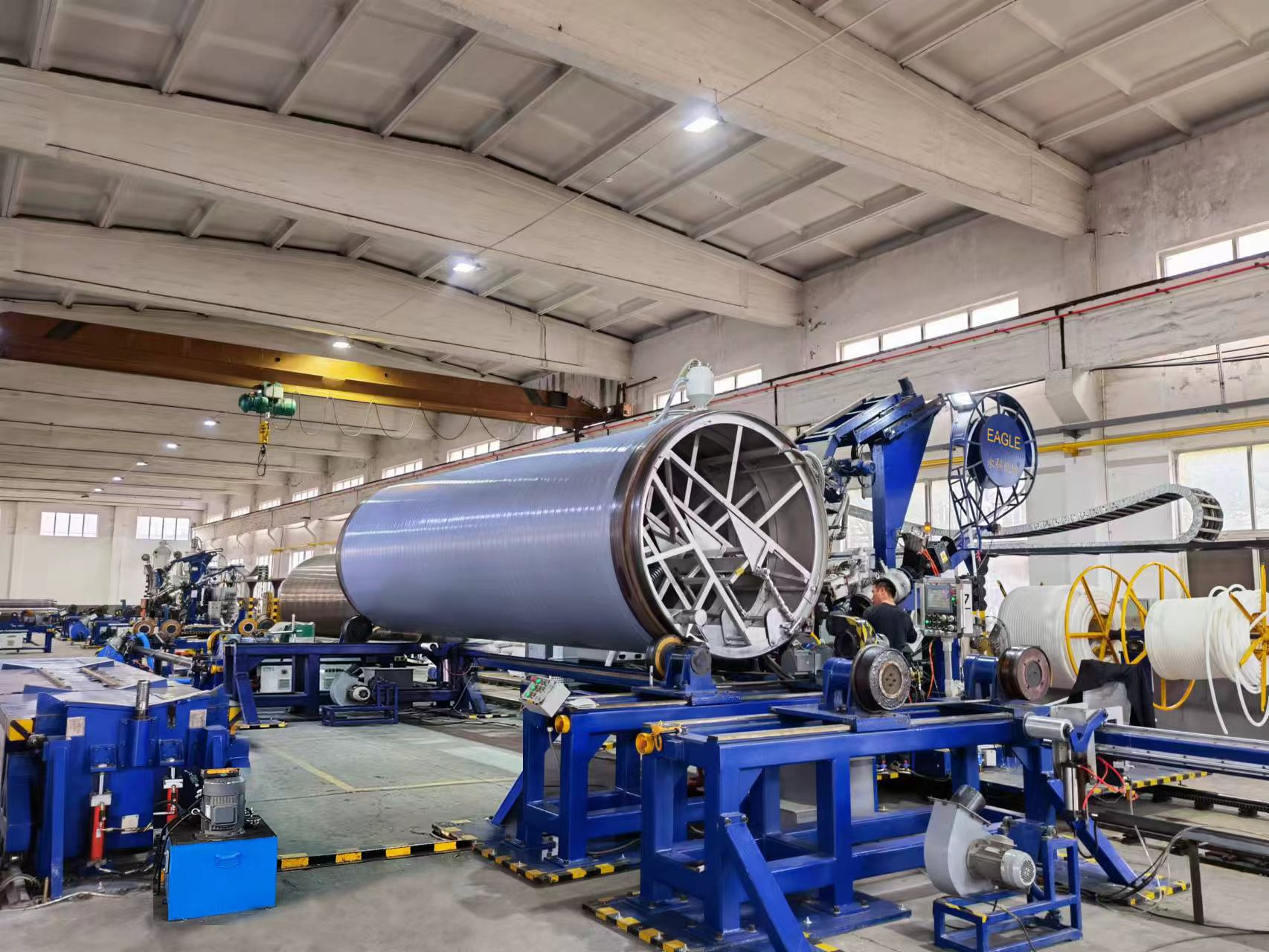
Spiral-winding equipment
Large pipe section on the spiral-winding line.
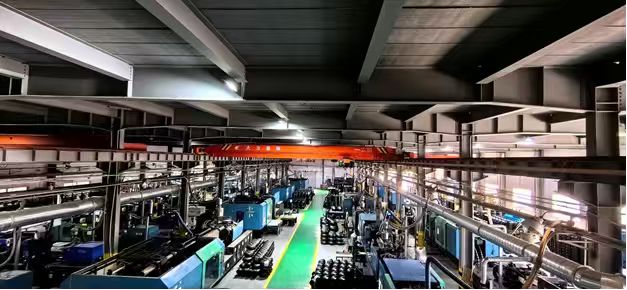
Workshop overview
Production workshop with several active lines.
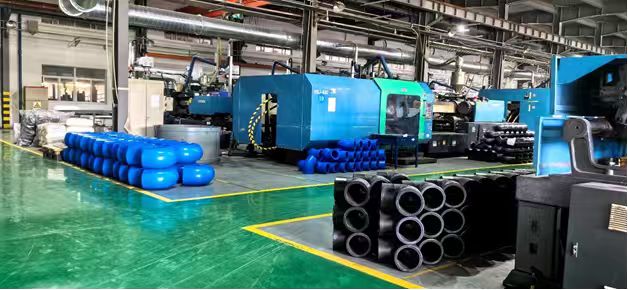
Pipe Fittings Manufacturing
Plastic pipe sections beside the production equipment.
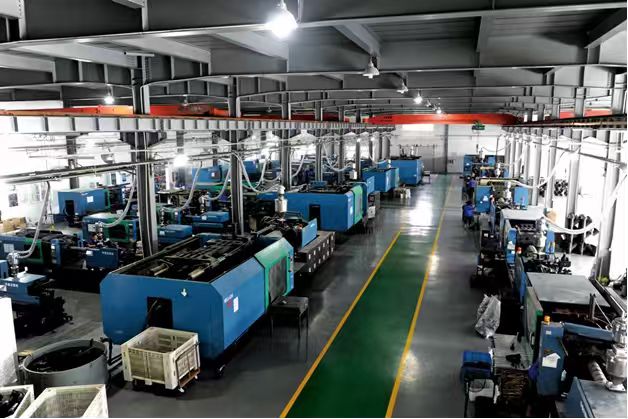
Extrusion lines
Parallel extrusion lines inside the workshop.
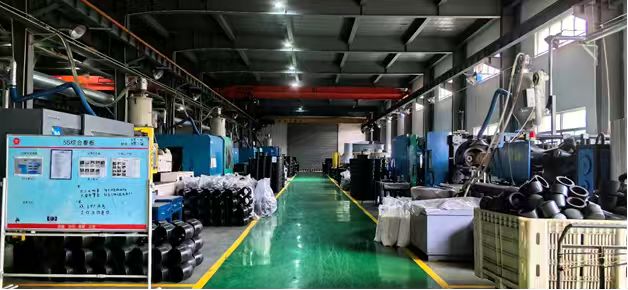
Production floor
Pipe production line and material handling area.
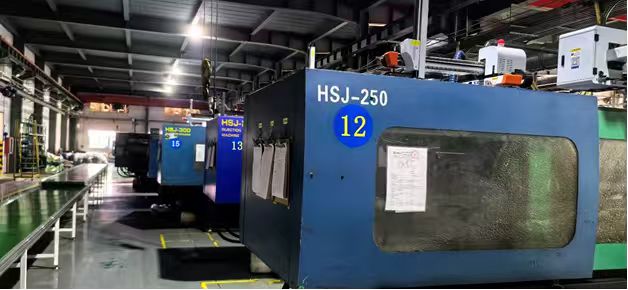
Injection molding equipment
Blue injection molding machine on the factory floor.
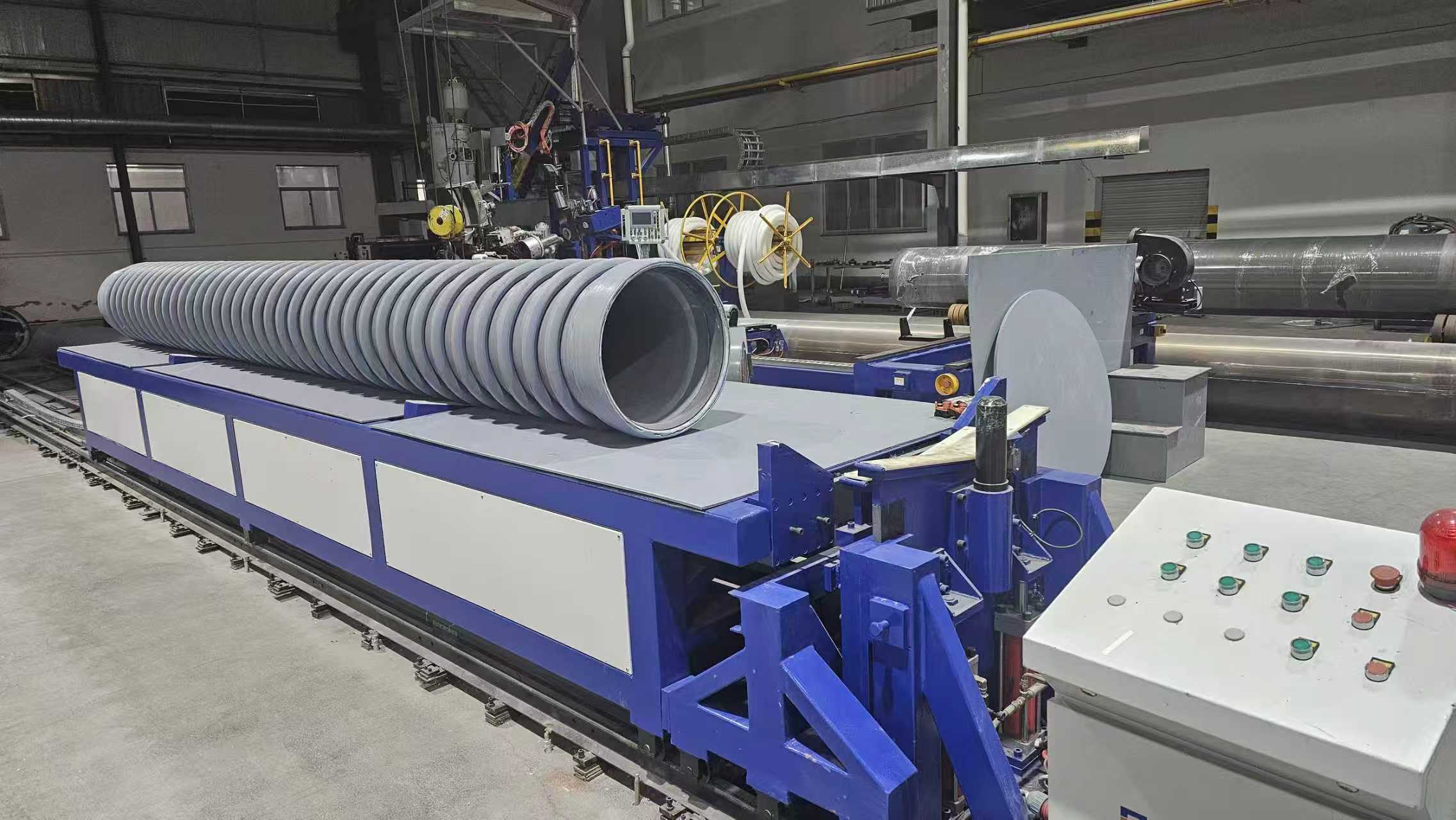
Large pipe handling
Wound pipe section on workshop handling equipment.
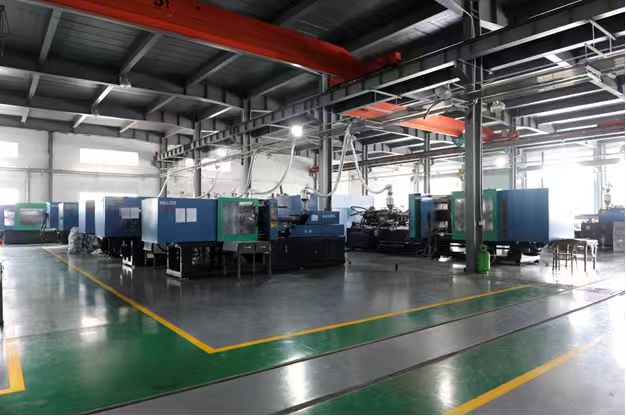
Equipment area
Industrial equipment arranged along a clean factory aisle.
Planning a pipe order?
Send the diameter, ring-stiffness grade, length and destination with your request.